

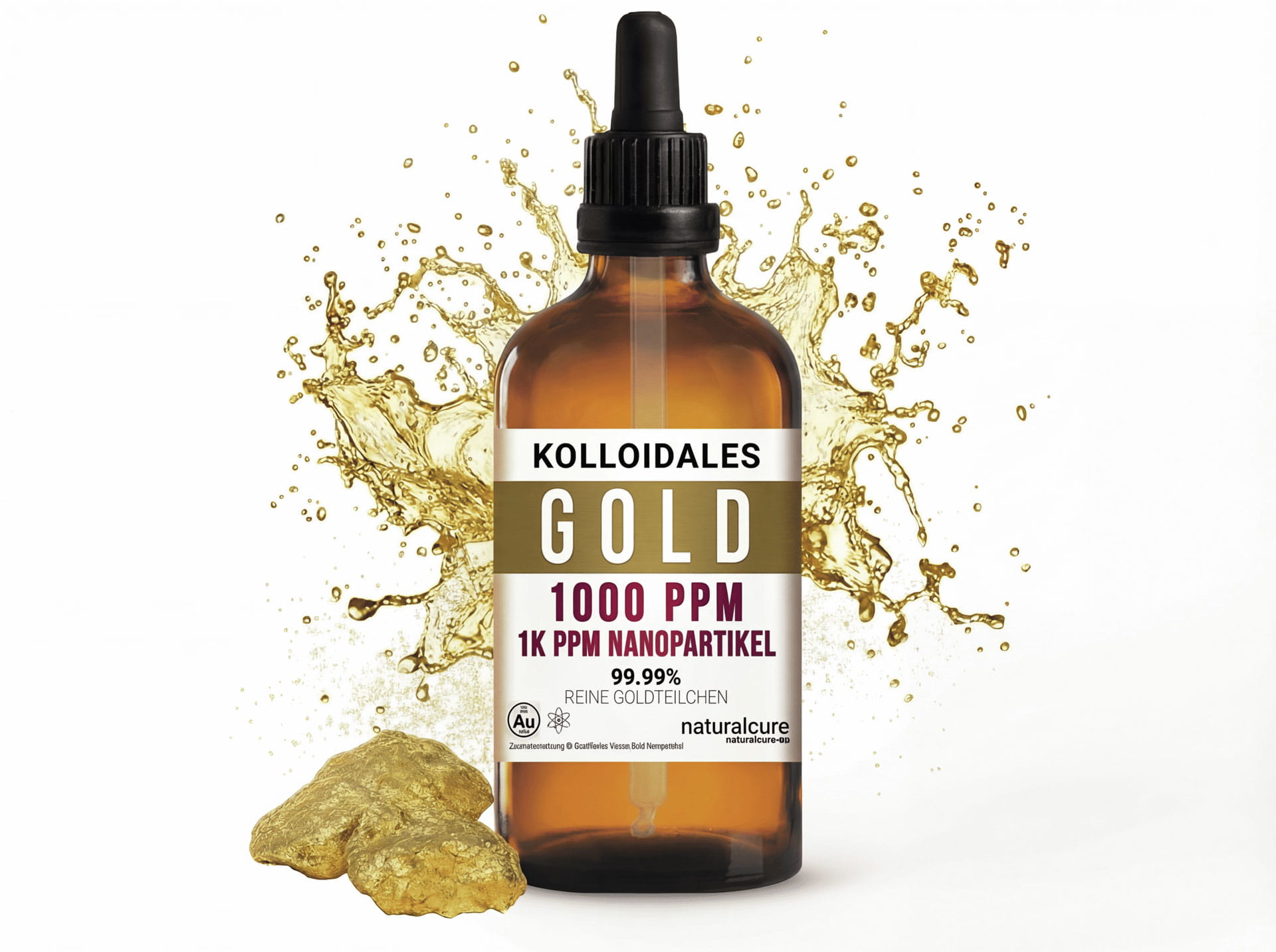


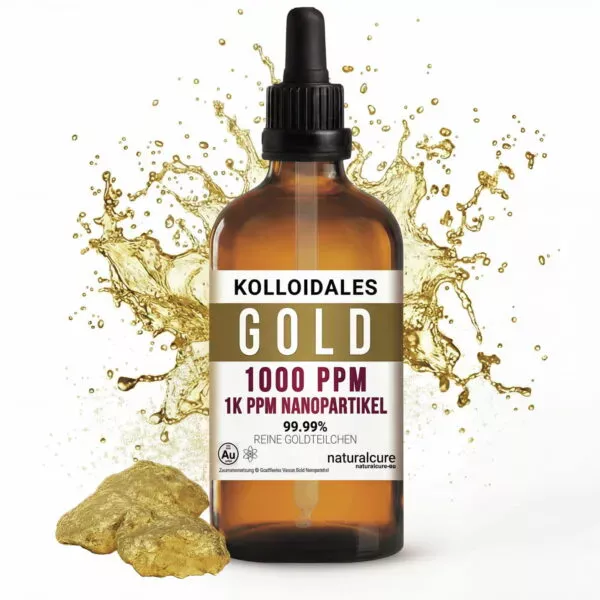
Colloidal gold 1000 ppm - highly concentrated colloidal gold
Original price was: 179,90 €.159,90 €Current price is: 159,90 €. inkl. MwSt.
With colloidal gold 1000 ppm – one of the strongest colloidal gold solutions available. For demanding applications requiring maximum purity and efficacy.
Colloidal gold 1000 ppm: Definition, concentration, production and storage
Colloidal gold is the subject of numerous materials science, physical, and laboratory chemical investigations. Anyone studying the properties of highly concentrated precious metal dispersions will encounter parameters such as particle size , purity , ppm concentration , and manufacturing process . This article explains the chemical and physical principles of colloidal gold at 1000 ppm, as well as the quality criteria for its production and storage.
Quick Overview
Summary
The product is a highly concentrated solution of colloidal gold with a concentration of 1000 ppm. The solution consists of pure gold nanoparticles with a size of 40 nm and contains no chemical stabilizers or ionic components. It is designed for technical applications, cosmetics, and as a base for dilutions.
Key Points
- Concentration of 1000 ppm
- Particle size of 40 nm
- No chemical stabilizers or ions
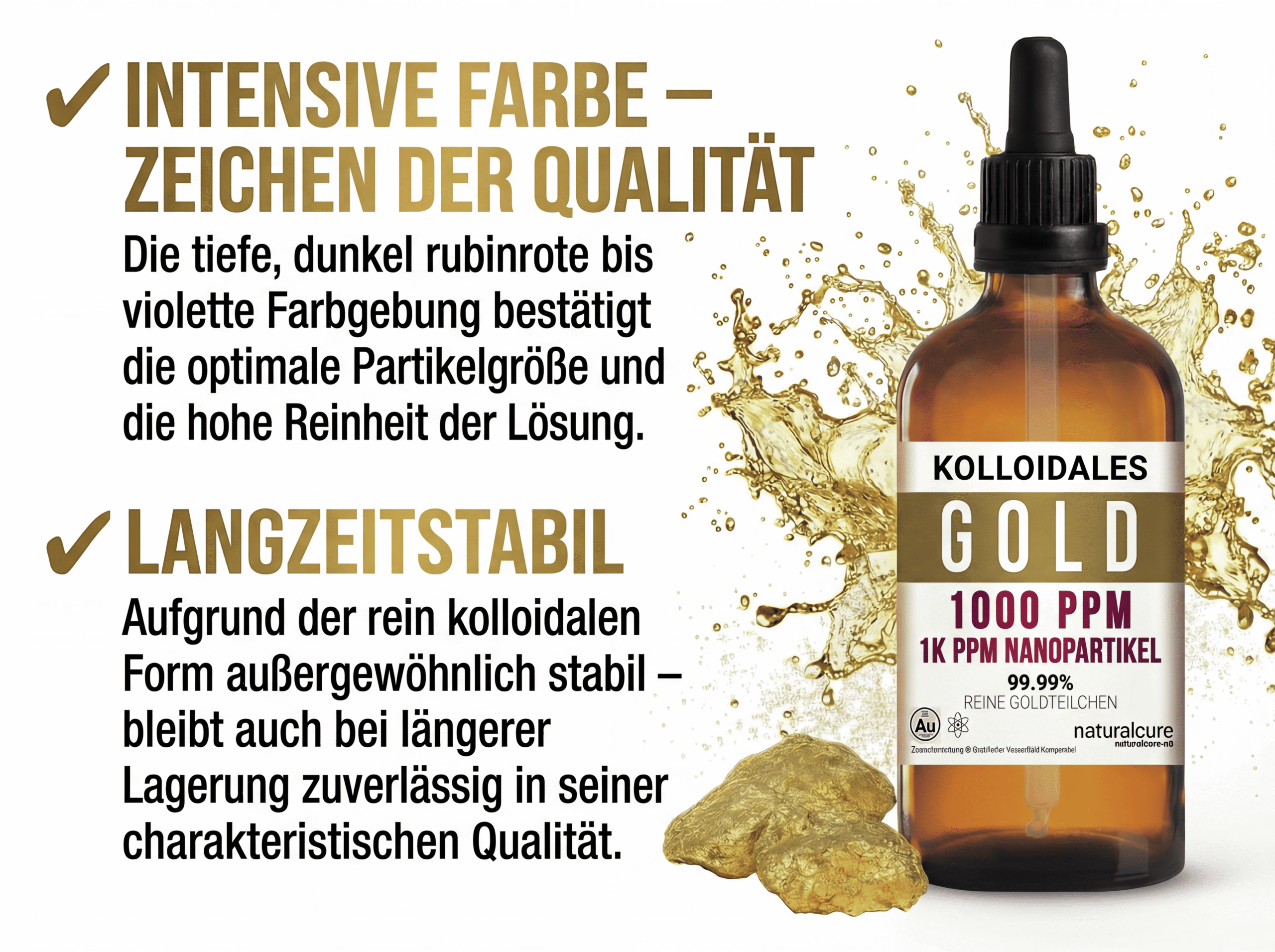
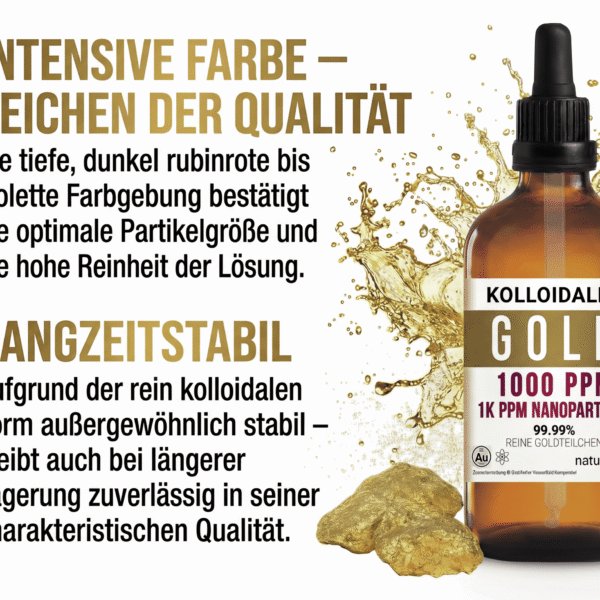
- Ruby-red to violet color as a quality indicator
FAQ
- What is colloidal gold?
- Colloidal gold (also known as gold sol) is a fine physical dispersion in which microscopic particles of elemental pure gold (usually 1 to 20 nm in size) are suspended in highly pure, demineralized water without chemically dissolving in it.
- What does 1000 ppm mean for colloidal gold?
- The unit ppm stands for “parts per million.” A concentration of 1000 ppm corresponds to 1,000 milligrams (1 gram) of pure gold per liter of ultrapure water, assuming a mass-per-volume concentration.
- How is pure colloidal gold manufactured?
- High-quality colloidal gold can be produced using physical processes such as high-voltage electrolysis or a plasma arc process with fine-gold electrodes in ultrapure water. Whether the final product is free of chemical reducing agents, salts, or stabilizers depends on the manufacturing process and should be confirmed by the manufacturer.
- What is the purity grade of the gold used?
- The manufacturing process may use certified fine-gold electrodes with a purity of at least 99.99% (24 karat / four-nines fine gold) and repeatedly distilled Type 1 ultrapure water (Aqua bidestillata). These specifications should be verified using the manufacturer's documentation.
- Why does colloidal gold have a ruby-red to violet color?
- The characteristic color can result from surface plasmon resonance, a physical phenomenon in which gold nanoparticles interact with visible light. The color depends on factors such as particle size, shape, concentration, and aggregation.
- How can you tell whether colloidal gold is still stable?
- A visible light beam passing through a dispersion may indicate the presence of suspended particles (the Tyndall effect). However, this effect alone cannot confirm product stability. A dark deposit at the bottom of the bottle may indicate sedimentation or particle aggregation.
- How should colloidal gold 1000 ppm be stored?
- Follow the manufacturer's storage instructions. If recommended, keep the product protected from light in its original, tightly closed container, at the specified temperature and away from sources of contamination.
- What is the legal status of colloidal gold?
- In the European Union, the legal status of colloidal gold depends on its intended use and composition. Its use in food or food supplements must be assessed under the applicable regulations, including Regulation (EU) 2015/2283 on novel foods. It should not be assumed to be authorized for consumption without checking the relevant regulatory requirements.
1. Definition: What is colloidal gold and what does “1000 ppm” mean?
Physical-chemical fundamentals
Colloidal gold (also referred to as gold sol in the literature) is a dispersed system in which microscopically small, elemental gold particles (nanoparticles) are distributed in highly purified, demineralized water.
- Dispersion instead of a true solution: Unlike ionic gold salts (such as gold chloride), the gold atoms in the colloid are not chemically dissolved. They are solid, metallic microparticles suspended in the dispersion medium of water.
- Particle size and zeta potential: In high-quality dispersions, the individual gold clusters have a diameter of just a few nanometers (usually between 1 and 20 nm). Due to their identical electrical surface charge (measurable via the so-called zeta potential ), the nanoparticles repel each other. In conjunction with Brownian motion, this prevents the particles from settling (sedimenting) despite the high density of gold.
- Optical properties (surface plasmon resonance): Depending on particle size and density, genuine colloidal gold does not appear metallic yellow, but rather exhibits a ruby-red to deep violet color . This phenomenon arises from surface plasmon resonance , in which the free electrons on the surface of the gold nanoparticles interact with the incident visible light. The scattered light cone of the suspended particles can be visualized using a laser beam ( Tyndall effect ).
What does the concentration value “1000 ppm” mean?
The unit of measurement ppm stands for “parts per million” and denotes the mass ratio between the dispersed precious metal and the carrier liquid:
- 1 ppm corresponds exactly to 1 milligram (mg) of gold per 1 kilogram (approx. 1 liter) of water .
- 1000 ppm therefore means that 1,000 milligrams (exactly 1 gram) of pure fine gold are dispersed in one liter of ultrapure water (0.1 mass percent).
Technical feature of 1000 ppm:
While conventional gold colloids often have concentrations between 1 and 50 ppm, 1000 ppm represents a high concentration . Because the average distance between the nanoparticles is extremely small at such a high particle density, the demands on the manufacturing process increase considerably: only a precisely controlled charge distribution and extremely small particle sizes will ensure that the dispersion remains stable, preventing the particles from agglomerating (clumping together) and settling at the bottom of the container.
2. Production: High-voltage electrolysis and purity criteria
The physical stability of colloidal gold depends significantly on the chosen production method and the purity of the starting materials.
The high-voltage plasma process (physical manufacturing)
Because gold, as a precious metal, is extremely unreactive, it can hardly be removed by simple low-voltage electrolysis in pure water. Therefore, modern laboratory and process engineering uses high-voltage electrolysis or arc electrolysis (according to Georg Bredig) :
- Use of fine gold electrodes: Two electrodes made of certified fine gold are placed in a container with ultrapure water.
- High-voltage discharge: Precisely controlled high-voltage pulses generate a microscopic plasma field underwater between the electrodes.
- Thermoelectric atomization: Due to the high energy density in the arc, minute amounts of gold evaporate on the electrode surface and condense immediately in the cool ultrapure water to form electrically charged nanoparticles.
- Free from chemical additives: Unlike the chemical reduction method (according to Turkevich), in which golden acid is reacted using citrates or other reducing agents, the physical high-voltage process requires no stabilizers, salts, or chemical additives whatsoever . The end product consists of 100% pure water and elemental gold particles.
The 3 key purity requirements
To prevent contamination or premature discharge of the colloid, strict laboratory standards are applied during production:
- Fine gold purity of at least 99.99% (24 karat): The gold electrodes used must meet at least the “Four Nines Fine” (999.9) standard to prevent foreign metal ions (e.g., copper or silver) from entering the liquid.
- Ultrapure water (Type 1 / Aqua bidestillata): The carrier liquid is repeatedly distilled and deionized laboratory water with a minimal residual conductivity of < 0.1 µS/cm . If minerals or electrolytes were present in the water, they would disrupt the electrical charge shell of the gold particles and lead to immediate flocculation.
- Inert container materials: Production takes place exclusively in non-reactive laboratory vessels (e.g., made of borosilicate glass) to prevent the leaching of foreign substances from the container.
3. Proper storage and shelf life
Since colloidal gold is a physically sensitive charge system, external factors influence the stability of the dispersion:
- Light protection (violet glass / amber glass): UV radiation and direct sunlight can disrupt the electrical charge balance of the nanoparticles. High-quality colloids are therefore stored in Miron violet glass or opaque amber glass.
- Constant room temperature: Storage should be in a cool, dry place at a constant room temperature (ideally between 15°C and 22°C ). Refrigeration or freezing should be avoided, as strong temperature fluctuations slow down Brownian motion and promote clumping of the particles.
- Distance from electromagnetic fields: The container should not be stored in the immediate vicinity of strong magnetic fields or sources of electronic radiation (e.g., Wi-Fi routers, microwaves, power supplies or loudspeakers) in order to preserve the zeta potential of the colloids.
- Avoiding contamination: When opening the bottle, the liquid must not come into contact with metals, organic substances or tap water, as even the smallest electrolyte contamination can impair the stability of 1000 ppm concentrates.
4. Legal Notice & Classification
Colloidal gold is a technical or laboratory chemical raw material and research product. According to current European Union regulations (in particular the Novel Food Regulation (EU) 2015/2283 ), colloidal gold is not approved as a food or food supplement . Its sale and supply are exclusively for technical, scientific, analytical, or further processing purposes as laboratory equipment.
| Weight | 100 g |
|---|
Only logged in customers who have purchased this product may leave a review.
Frequently bought together


Colloidal Gold 50 ppm (500 ml) – Made in Germany
Colloidal gold 50 ppm (500 ml) in laboratory quality, manufactured using a physical high-voltage electrolysis process. The pure dispersion consists exclusively of 99.99% certified fine gold (24 carats) and multiple-distilled type 1 ultrapure water (aqua bidestillata).
- Concentration: 50 ppm (50 mg pure gold per liter of ultrapure water)
- Volume & Packaging: 500 ml in a light-protected amber glass bottle
- Purity: Free from chemical additives, stabilizers, citrates, and gold salts
- Properties: Nanoparticles in electrostatic suspension with high zeta potential
- Legal Note: Technical and laboratory chemical raw material (not approved as a food or food supplement under EU Regulation 2015/2283)
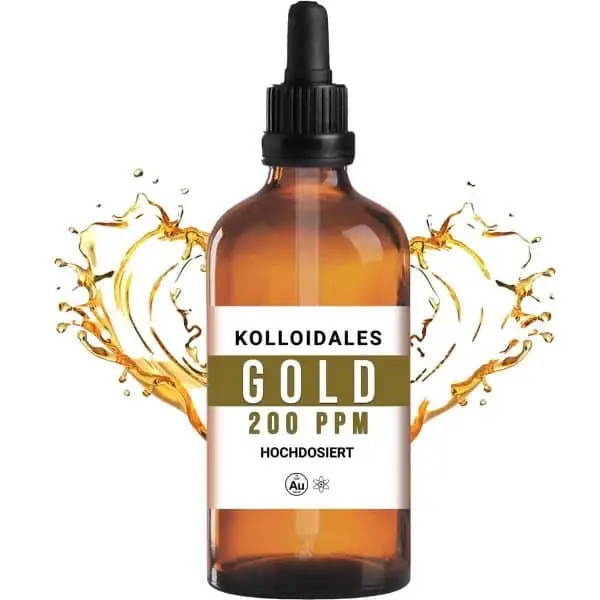

High-purity colloidal gold 200 PPM – 100 ml
- Premium quality guaranteed : Every product is manufactured with the highest precision and under strict quality controls to offer you a product of unsurpassed purity and quality.
- Highest purity through highly concentrated colloidal gold : Our unique formula with 200 ppm colloidal gold guarantees outstanding quality and purity of this valuable product.
- Tradition meets innovation : Colloidal gold has been valued for centuries. We combine modern knowledge with traditional manufacturing techniques to offer you a product of exceptional quality.
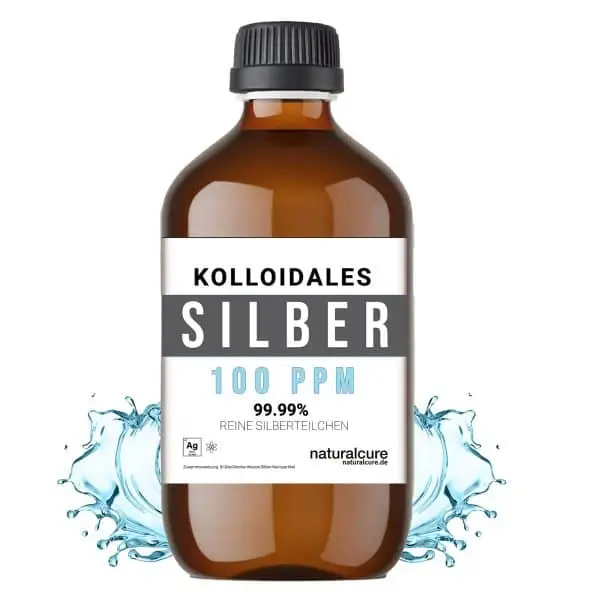

Colloidal silver (100 ppm) 500 ml - High-dose silver water
Colloidal silver 100 ppm (500 ml) – highly concentrated silver water of tested laboratory quality. Our precious metal dispersion is freshly produced daily using a precisely controlled electrolysis process from 99.99% certified fine silver and multiple distilled type 1 purified water ( aqua bidestillata ) and bottled in a 500 ml amber glass bottle (pharmacy grade) to protect it from light.
- Concentration: True 100 ppm (100 mg pure fine silver per liter of ultrapure water)
- Contents & Packaging: 500 ml storage bottle made of UV-protective pharmaceutical glass (amber glass)
- Purity: 100% free from chemical additives, stabilizers, citrates, proteins or silver salts
- Quality characteristic: High colloid density with very fine particle size (1–15 nm) and stable zeta potential
- Note: Technical / laboratory chemical raw material (not a food or food supplement according to EU Regulation 2015/2283)
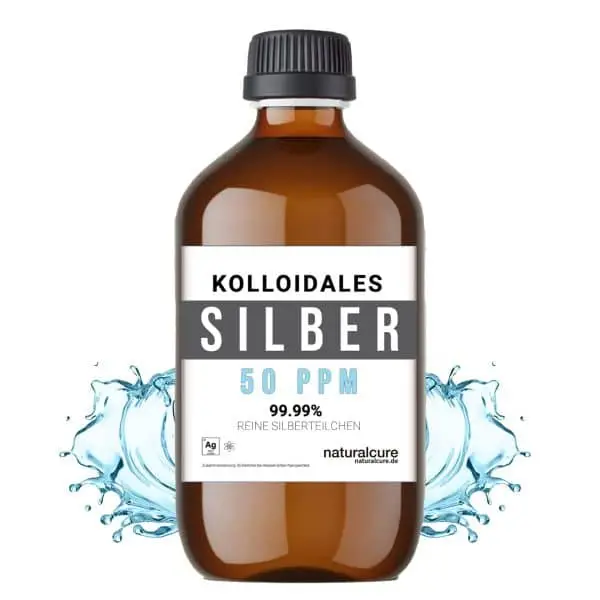

Colloidal Silver 50 ppm (500 ml) – Pure Silver Water
Colloidal silver 50 ppm (500 ml) – highly pure silver water of verified laboratory quality. Freshly produced through a controlled electrolysis process using 99.99% certified fine silver and multiple-distilled Type 1 ultrapure water (aqua bidestillata), bottled in light-protecting amber glass.
- Concentration: Verified 50 ppm (50 mg pure fine silver per liter of water)
- Volume & Packaging: 500 ml in a protective pharmaceutical amber glass bottle
- Purity: 100% free from chemical additives, stabilizers, citrates, proteins, and silver salts
- Particle Quality: Ultrafine silver colloids (1–15 nm) with stable zeta potential
- Classification: Technical & laboratory-chemical raw material (not a food or food supplement under EU Regulation 2015/2283)
Related products
Colloidal silver (100 ppm) 500 ml - High-dose silver water
Colloidal silver 100 ppm (500 ml) – highly concentrated silver water of tested laboratory quality. Our precious metal dispersion is freshly produced daily using a precisely controlled electrolysis process from 99.99% certified fine silver and multiple distilled type 1 purified water ( aqua bidestillata ) and bottled in a 500 ml amber glass bottle (pharmacy grade) to protect it from light.
- Concentration: True 100 ppm (100 mg pure fine silver per liter of ultrapure water)
- Contents & Packaging: 500 ml storage bottle made of UV-protective pharmaceutical glass (amber glass)
- Purity: 100% free from chemical additives, stabilizers, citrates, proteins or silver salts
- Quality characteristic: High colloid density with very fine particle size (1–15 nm) and stable zeta potential
- Note: Technical / laboratory chemical raw material (not a food or food supplement according to EU Regulation 2015/2283)
Colloidal Silver 50 ppm (500 ml) – Pure Silver Water
Colloidal silver 50 ppm (500 ml) – highly pure silver water of verified laboratory quality. Freshly produced through a controlled electrolysis process using 99.99% certified fine silver and multiple-distilled Type 1 ultrapure water (aqua bidestillata), bottled in light-protecting amber glass.
- Concentration: Verified 50 ppm (50 mg pure fine silver per liter of water)
- Volume & Packaging: 500 ml in a protective pharmaceutical amber glass bottle
- Purity: 100% free from chemical additives, stabilizers, citrates, proteins, and silver salts
- Particle Quality: Ultrafine silver colloids (1–15 nm) with stable zeta potential
- Classification: Technical & laboratory-chemical raw material (not a food or food supplement under EU Regulation 2015/2283)
High-purity colloidal gold 200 PPM – 100 ml
- Premium quality guaranteed : Every product is manufactured with the highest precision and under strict quality controls to offer you a product of unsurpassed purity and quality.
- Highest purity through highly concentrated colloidal gold : Our unique formula with 200 ppm colloidal gold guarantees outstanding quality and purity of this valuable product.
- Tradition meets innovation : Colloidal gold has been valued for centuries. We combine modern knowledge with traditional manufacturing techniques to offer you a product of exceptional quality.
Colloidal Gold 50 ppm (500 ml) – Made in Germany
Colloidal gold 50 ppm (500 ml) in laboratory quality, manufactured using a physical high-voltage electrolysis process. The pure dispersion consists exclusively of 99.99% certified fine gold (24 carats) and multiple-distilled type 1 ultrapure water (aqua bidestillata).
- Concentration: 50 ppm (50 mg pure gold per liter of ultrapure water)
- Volume & Packaging: 500 ml in a light-protected amber glass bottle
- Purity: Free from chemical additives, stabilizers, citrates, and gold salts
- Properties: Nanoparticles in electrostatic suspension with high zeta potential
- Legal Note: Technical and laboratory chemical raw material (not approved as a food or food supplement under EU Regulation 2015/2283)
Reviews
There are no reviews yet.